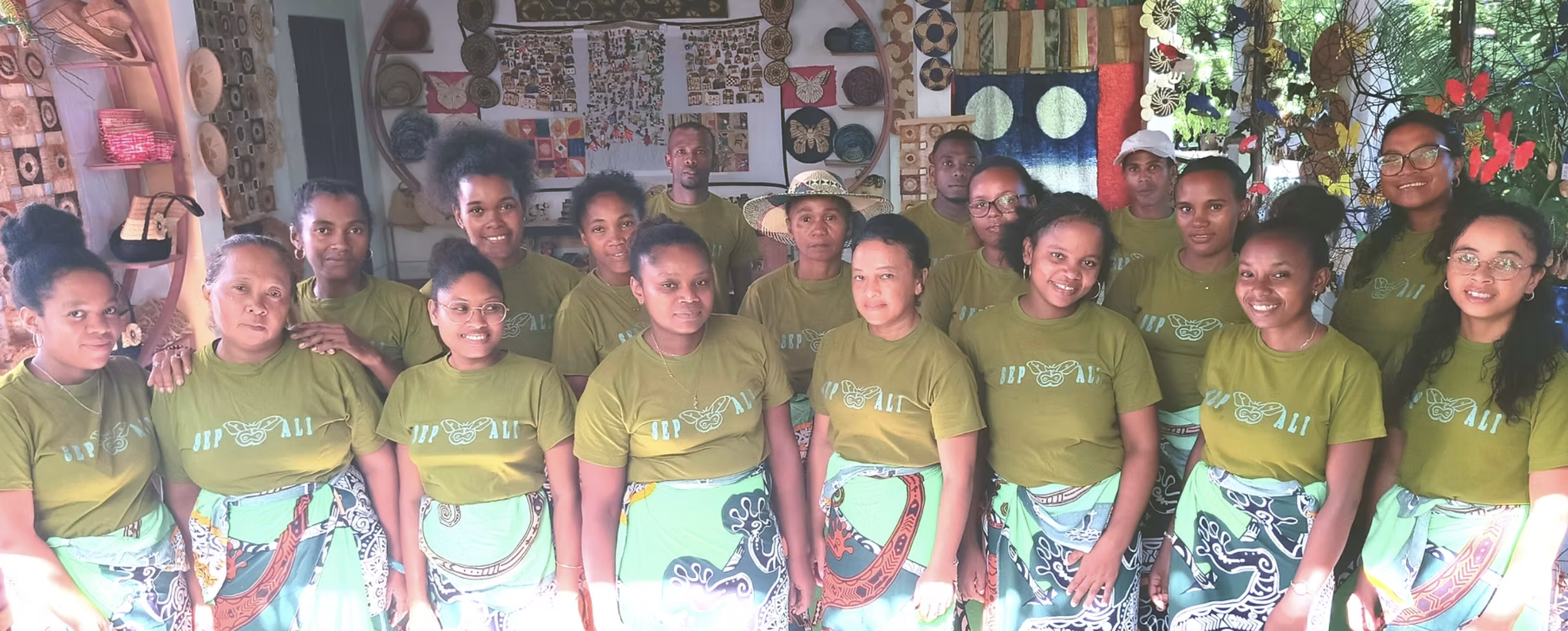
SEPALI is a non-governmental organization that connects conservation with sustainable livelihoods in Madagascar. Working with rural farmers near the Makira Protected Area in the country’s northeast, it develops income-generating opportunities that link communities’ economic well-being to the protection of valuable ecosystems.
The establishment of the protected area restricted many traditional agricultural and forest-based livelihoods, leaving some communities with few viable alternatives. These economic pressures can increase reliance on illegal logging, bushmeat hunting, and unauthorized slash-and-burn cultivation, known locally as tavy. SEPALI addresses this challenge by helping families earn an income while conserving the surrounding habitat.
At the heart of its approach is silk production using native moth species. Farmers grow the moths’ native host plants along forest edges and in abandoned pastures, creating a productive use for previously cleared land. By planting 200 host trees and rearing silk moth larvae, participating farmers can increase their average income by 30% after two years. When other family members help finish the silk products, income gains can reach 40–60%.
By making environmental protection economically viable, SEPALI helps families meet their immediate needs while preserving Madagascar’s biodiversity for future generations.